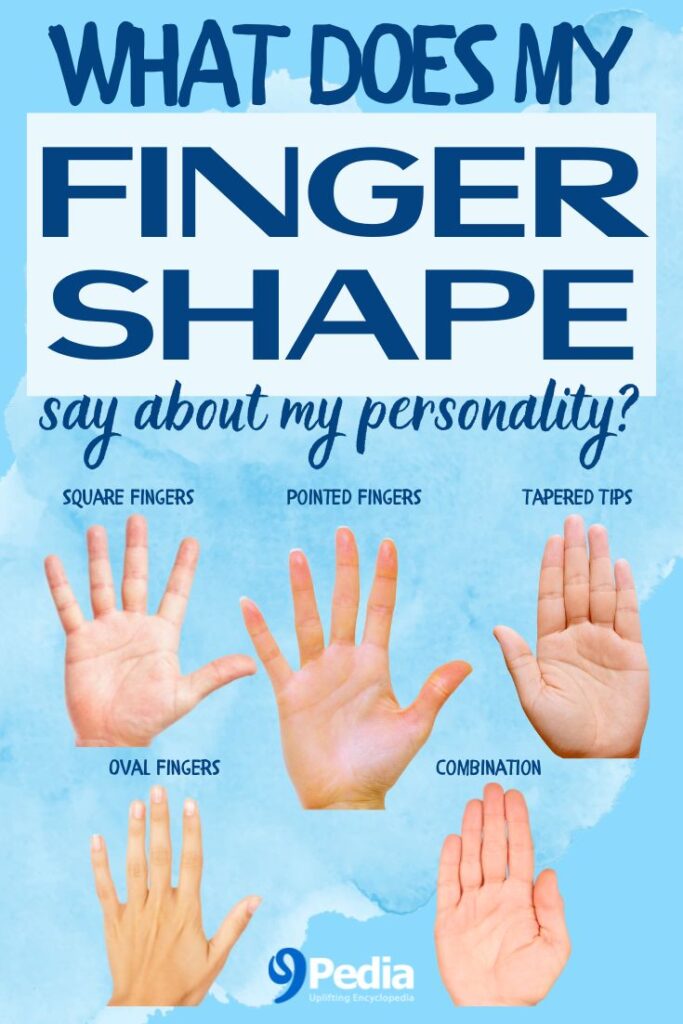
Want to know what the shape of your fingers says about your personality and how to use the Japanese finger test to see what your personality traits are based on the shape and size of your fingers? Let’s get straight to it, this is going to be fun!
In This Article You Will Find:
The Ancient Origins of the Japanese Finger Test
The Japanese Finger Test, or “Yubi Shindan” as it’s known in Japan, dates back to ancient Eastern medicine and philosophical traditions. While Western personality assessment typically relies on psychological questionnaires or behavioral analysis, Eastern traditions have long studied the connection between physical features and inner character.
This distinctive method of personality analysis emerged from the intersection of several Japanese cultural traditions, including elements of:
- Traditional Eastern medicine: The belief that the body’s external features reflect internal health and character
- Buddhist philosophy: The concept that physical manifestations mirror spiritual essence
- Ancient Japanese folk wisdom: Generational knowledge passed down through families about reading characters through physical traits
Historically, the finger test was used not only to understand personality but also to determine compatibility between potential marriage partners. Parents would sometimes examine the finger shapes of their children’s potential spouses to assess whether they would make suitable life partners.
How to Perform the Japanese Finger Test
The Japanese Finger Test is remarkably simple to perform, requiring nothing but your own hand and a few moments of observation. Follow these steps to discover what your fingers reveal about your personality:
- Start with a relaxed hand: Place your hand palm-down on a flat surface, or hold it relaxed in front of you.
- Observe your fingers naturally: Don’t force them to straighten or bend. Let them assume their natural position.
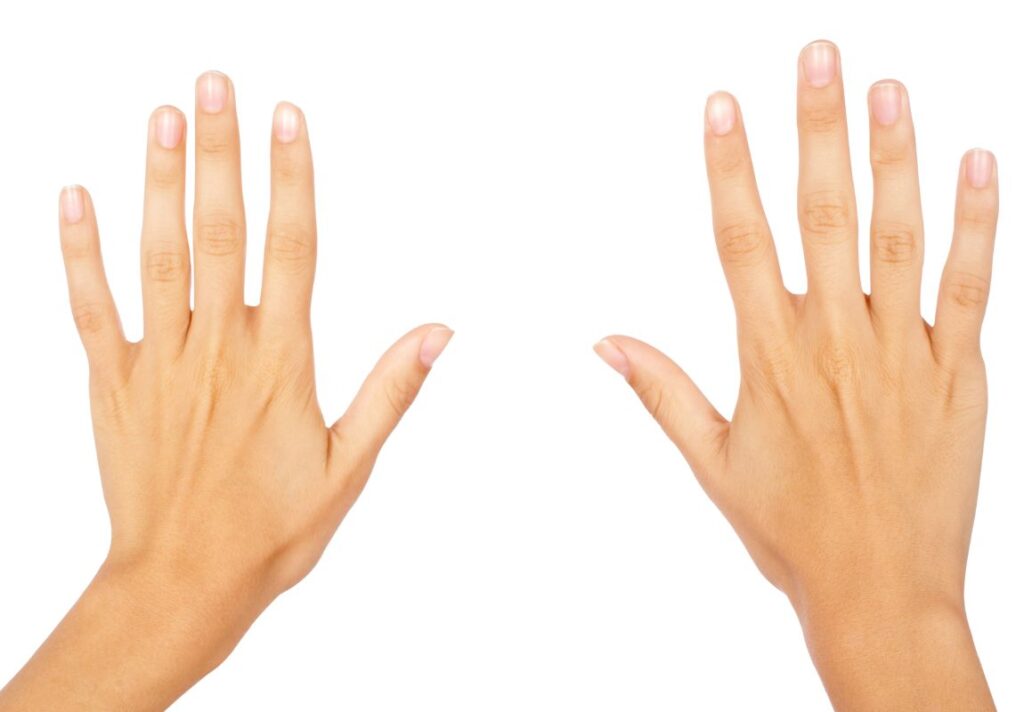
- Note the relative lengths: Pay particular attention to the relationship between your ring finger and index finger, as well as the overall proportion of all fingers.
- Examine finger shape: Notice whether your fingers are straight or curved, thin or thick, smooth or knotted at the joints.
- Check your fingertips: Are they pointed, rounded, square, or spatulate (widening at the tip)?
- Compare both hands: In traditional analysis, the dominant hand (usually the right for right-handed people) shows your public personality, while the non-dominant hand reveals your private self.
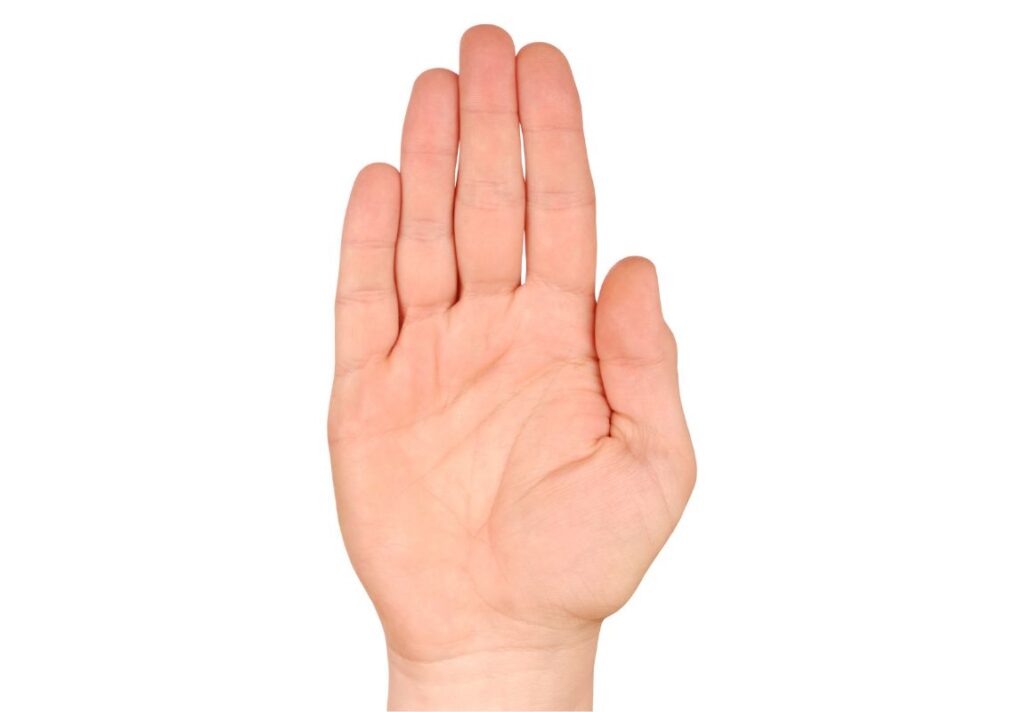
The most critical aspect of the test involves comparing the length of your ring finger to your index finger. This ratio, scientifically known as the 2D:4D ratio, is believed to correlate with certain personality traits and has been the subject of modern scientific research.
The Five Finger Types and What They Reveal
According to the Japanese Finger Test tradition, all fingers can be categorized into five distinct types, each associated with different personality characteristics:
1. Earth Fingers (Square Tips)
- Physical characteristics: Short fingers with square-shaped fingertips and well-developed knuckles.
- Personality traits: People with earth fingers tend to be practical, reliable, and grounded. They excel at completing tasks and following through on commitments. They value stability and security above all else and make decisions based on logic rather than emotion.
- Career affinities: Earth-fingered individuals often thrive in careers requiring attention to detail and practical skills, such as accounting, engineering, craftsmanship, and administration.

2. Air Fingers (Pointed Tips)
- Physical characteristics: Long, thin fingers with pointed or conical fingertips and pronounced knuckles.
- Personality traits: Those with air fingers are typically intellectual, communicative, and curious. They process information quickly and enjoy theoretical discussions. These individuals are often visionaries who see possibilities others miss, though they may sometimes struggle with practical implementation.
- Career affinities: Careers in writing, teaching, public speaking, research, and technology often suit air-fingered personalities.
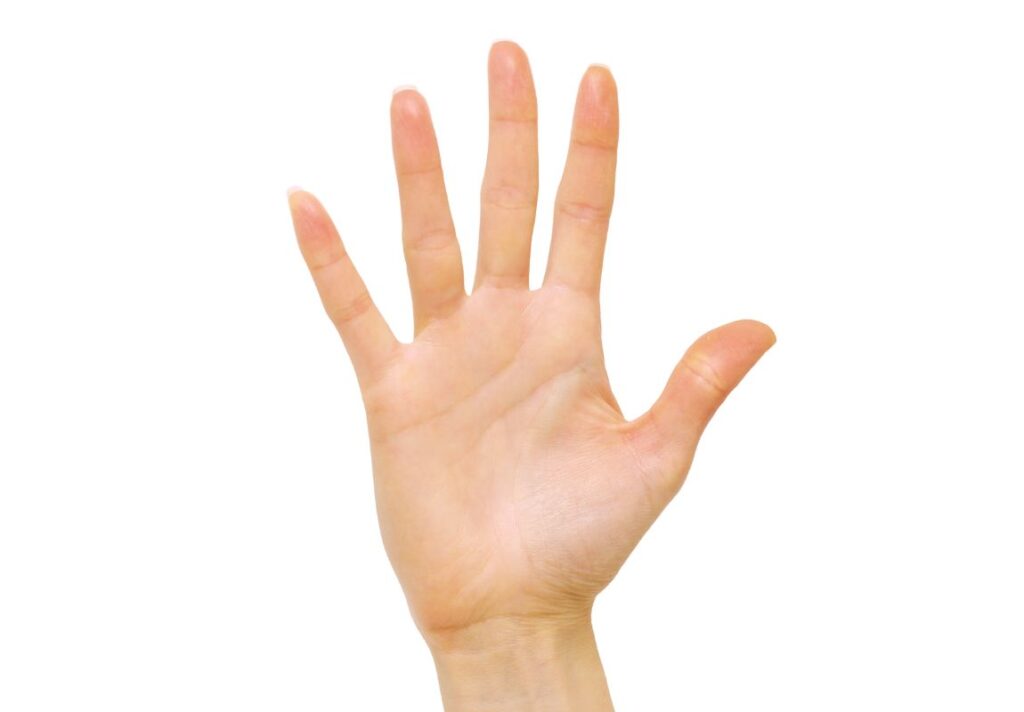
3. Fire Fingers (Tapered Tips)
- Physical characteristics: Medium-length fingers that are wider at the base and taper toward the tips with smooth joints.
- Personality traits: Fire-fingered individuals tend to be energetic, passionate, and action-oriented. They make decisions quickly based on intuition and are natural leaders who inspire others. They seek adventure and may become restless with routine.
- Career affinities: Entrepreneurship, sales, performance arts, sports, and leadership positions align well with fire finger personalities.

4. Water Fingers (Oval Tips)
- Physical characteristics: Long, flexible fingers with smooth joints and oval-shaped fingertips.
- Personality traits: People with water fingers are typically empathetic, intuitive, and emotionally sensitive. They understand nuance in relationships and excel at providing support to others. Their rich inner life and creative imagination allow them to see beyond surface appearances.
- Career affinities: Healing professions, counseling, artistic pursuits, and humanitarian work often appeal to water-fingered individuals.
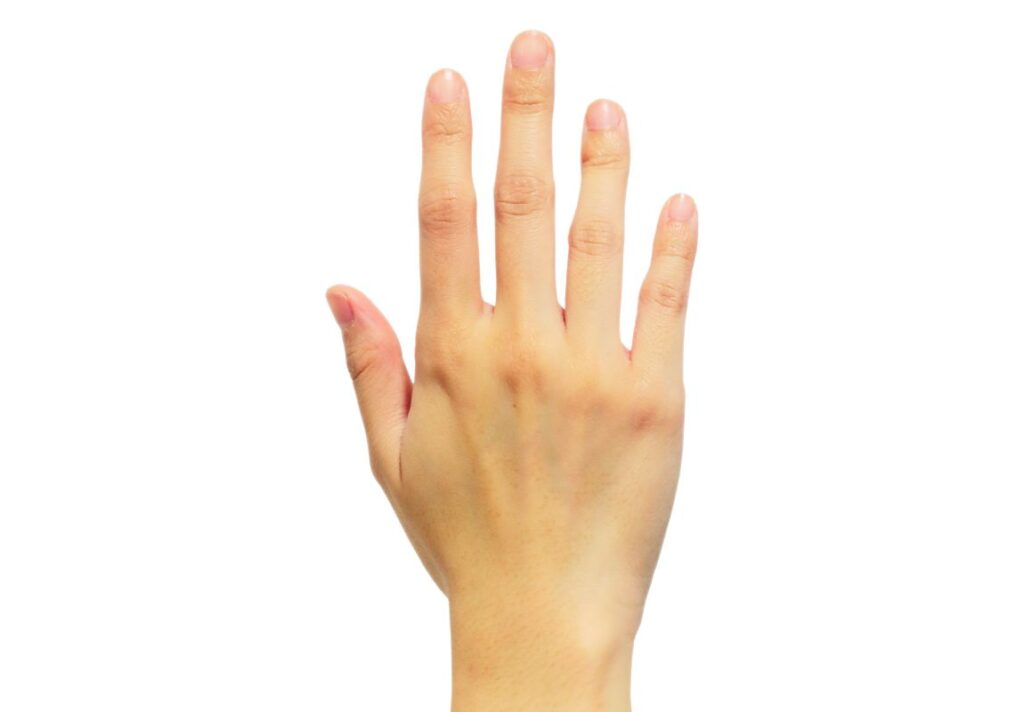
5. Balanced Fingers (Mixed Features)
- Physical characteristics: Even proportion between finger length and palm size, with balanced features from multiple types.
- Personality traits: Those with balanced fingers tend to be versatile, adaptable, and well-rounded. They can see multiple perspectives and adjust their approach based on circumstances. They often serve as mediators in conflicts and excel in varied environments.
- Career affinities: Project management, diplomacy, consulting, and fields requiring versatility suit those with balanced fingers.
The Science Behind Finger Shapes and Personality
While the traditional Japanese Finger Test has cultural and historical significance, modern science has begun to explore connections between finger proportions and personal characteristics. Most notably, research has focused on the relationship between hormone exposure during fetal development and the resulting finger length ratios.
The 2D:4D ratio—the length of the index finger (2D) compared to the ring finger (4D)—has been linked to prenatal testosterone exposure. This hormonal influence may affect both physical development and certain behavioral tendencies.
Several scientific studies have examined correlations between finger ratios and traits such as:
- Assertiveness and competitiveness: Lower 2D:4D ratios (ring finger longer than index finger) correlate with higher prenatal testosterone exposure and potentially more competitive behavior.
- Empathy and emotional intelligence: Higher 2D:4D ratios (index finger longer than ring finger) may correlate with greater empathy and emotional awareness.
- Risk-taking behavior: Research suggests those with longer ring fingers relative to their index fingers may be more inclined toward risk-taking behaviors.
- Spatial abilities: Some studies indicate that lower 2D:4D ratios correlate with enhanced spatial reasoning abilities.
It’s important to note that these scientific findings show statistical correlations rather than definitive causal relationships. Personality development is complex and influenced by numerous factors beyond physical characteristics, including environment, upbringing, and personal experience.

What Your Finger Length Ratio Says About You
The comparative length of your fingers, particularly the index finger to ring finger ratio, may offer insights into your innate tendencies and strengths:
Longer Ring Finger (Low 2D:4D Ratio)
If your ring finger is noticeably longer than your index finger, traditional Japanese finger analysis suggests you may:
- Be naturally analytical and systematic in your thinking
- Exhibit strong determination and perseverance in pursuing goals
- Show aptitude for spatial reasoning and mathematical thinking
- Possess physical endurance and athletic ability
- Demonstrate leadership qualities and decisiveness
- Approach challenges with confidence and resilience
These traits align with higher prenatal testosterone exposure, according to some scientific research. People with this finger pattern may excel in fields requiring analytical thinking, spatial reasoning, and competitive drive.
Longer Index Finger (High 2D:4D Ratio)
If your index finger extends beyond your ring finger, traditional analysis indicates you may:
- Display strong communication skills and verbal fluency
- Show natural empathy and emotional intelligence
- Excel at understanding others’ perspectives and needs
- Approach conflict with diplomacy and tact
- Value harmony in relationships and environments
- Demonstrate creativity and artistic sensibility
These characteristics align with higher prenatal estrogen influence relative to testosterone. Individuals with this finger pattern might thrive in roles requiring interpersonal skills, verbal ability, and emotional understanding.
Equal Length Fingers
When the index and ring fingers are approximately equal in length, traditional finger analysis suggests a balance of traits:
- Demonstrate versatility and adaptability in varied situations
- Balance logical analysis with emotional awareness
- Show both independence and cooperative tendencies
- Approach challenges with flexibility and multiple perspectives
- Integrate diverse thinking styles and approaches
- Serve effectively as mediators or bridges between different viewpoints
This balance may represent equal influences of different hormonal factors during development, potentially creating a versatile and adaptable personality.
Reading Personality Through Fingertips
Beyond finger length, the Japanese Finger Test tradition places significance on the shape of fingertips:
Pointed Fingertips
Pointed fingertips, tapering to a narrow tip, traditionally indicate:
- Intuitive and quick thinking
- Psychic sensitivity and receptivity
- Idealistic vision and spiritual interests
- Quick judgment formation
- Creative inspiration and artistic leanings
Those with pointed fingertips may be drawn to creative pursuits, spiritual practices, or fields requiring intuitive insight.
Square Fingertips
Square fingertips, ending in a flat, rectangular shape, traditionally suggest:
- Methodical and organized thinking patterns
- Practical approach to challenges
- Reliability and consistency in behavior
- Preference for clear structures and systems
- Direct communication style
Individuals with square fingertips often excel in environments requiring systematic approaches and practical solutions.
Rounded Fingertips
Rounded fingertips, forming a smooth curve at the end, traditionally indicate:
- Balanced perspective and diplomatic approach
- Adaptability to changing circumstances
- Openness to different viewpoints
- Ability to find middle ground in conflicts
- Harmonious relationship building
People with rounded fingertips may excel in roles requiring adaptation, diplomacy, and relational skills.
Spatulate Fingertips
Spatulate fingertips, widening at the end like a spatula, traditionally suggest:
- Original thinking and innovative approaches
- Enthusiasm for exploration and discovery
- Hands-on learning preference
- Active energy and physical expressiveness
- Practical creativity and problem-solving
Those with spatulate fingertips often thrive in fields requiring innovation, physical engagement, and practical creativity.
The Connection Between Hand Shape and Character Traits
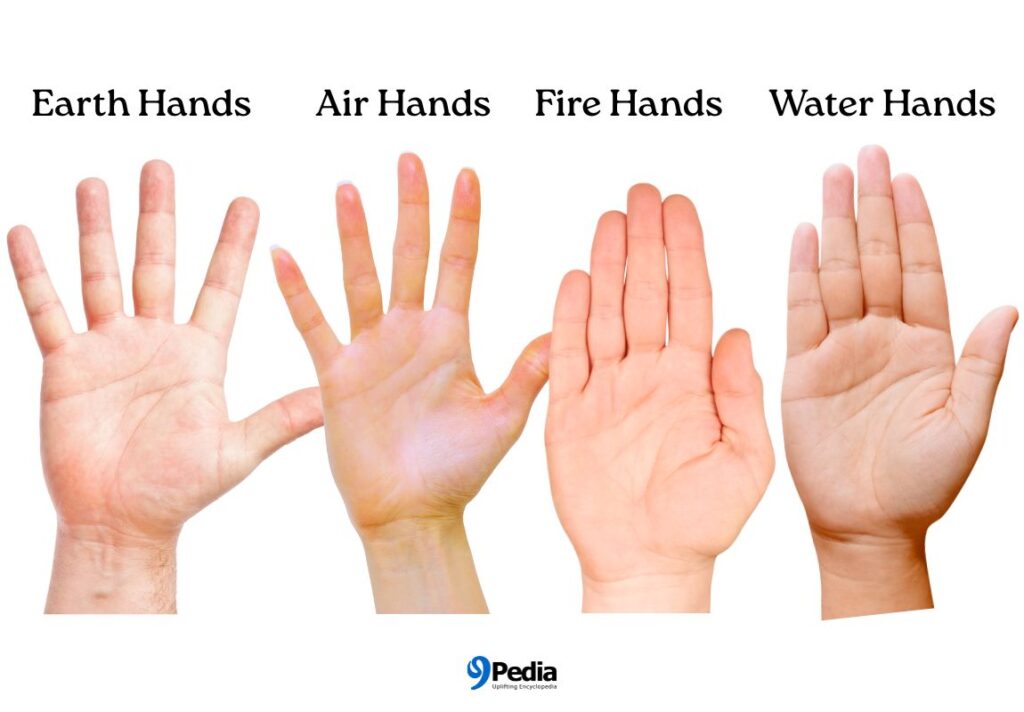
The Japanese Finger Test considers finger characteristics within the context of overall hand shape. Four primary hand types complement finger analysis:
Earth Hands
- Characteristics: Square palm, short fingers, thick skin, deep lines.
- Associated traits: Practical, reliable, methodical, sensible, grounded in reality.
- Life approach: Building concrete results through consistent effort.
Air Hands
- Characteristics: Square palm, long fingers, dry skin, visible knuckles.
- Associated traits: Intellectual, communicative, analytical, abstract thinking.
- Life approach: Seeking knowledge and understanding through mental exploration.
Fire Hands
- Characteristics: Rectangular palm, short fingers, warm skin, clear lines.
- Associated traits: Energetic, passionate, intuitive, action-oriented.
- Life approach: Pursuing inspiration and excitement through direct experience.
Water Hands
- Characteristics: Rectangular palm, long fingers, soft skin, subtle lines.
- Associated traits: Emotional, receptive, imaginative, relationship-oriented.
- Life approach: Seeking connection and meaning through emotional experience.
Understanding both finger characteristics and overall hand shape provides a more comprehensive personality assessment according to traditional Japanese finger analysis.
How Accurate is the Japanese Finger Test?
The Japanese Finger Test represents a fascinating intersection of traditional wisdom and modern scientific inquiry. When considering its accuracy, several factors merit consideration:
Traditional Perspective
From a traditional Japanese viewpoint, the finger test reflects centuries of observational wisdom passed through generations. Practitioners believe physical characteristics reflect inner nature because:
- The body develops as an integrated whole, with both physical and personality traits shaped by the same fundamental influences
- Ancient practitioners refined their observational techniques through thousands of cases
- The system uses multiple confirming indicators rather than single traits
Scientific Perspective
From a contemporary scientific standpoint:
- Some correlations between finger ratios and behavioral tendencies have statistical support
- The biological basis for these correlations (prenatal hormone exposure) has plausible mechanisms
- Research continues to explore these connections, with mixed but intriguing results
- Multiple factors beyond physical characteristics influence personality development
Balanced Assessment
For most balanced observers, the Japanese Finger Test represents:
- An interesting lens through which to consider personality tendencies
- A potential reflection of some biological influences on development
- One of many tools for self-reflection rather than a definitive assessment
- A cultural tradition with both philosophical depth and practical applications
Like many traditional practices, the Japanese Finger Test may be best approached with curious interest rather than either blind faith or dismissive skepticism. Its greatest value may lie in prompting self-reflection and consideration of how our physical and psychological aspects interact.

FAQs About the Japanese Finger Test
Is the Japanese Finger Test scientifically proven?
While traditional Japanese finger analysis has cultural and historical significance, scientific research has shown some correlations between finger proportions and certain traits. The 2D:4D finger ratio, in particular, has been linked to prenatal hormone exposure, which may influence certain behavioral tendencies. However, these findings show statistical correlations rather than definitive causal relationships, and personality development involves numerous factors beyond physical characteristics.
Can finger shapes change over time?
While the basic proportions of your fingers are established during development and remain relatively constant throughout life, subtle changes may occur due to aging, manual labor, injuries, or certain health conditions. The Japanese Finger Test traditionally focuses on innate finger proportions rather than temporary or acquired characteristics.
Do left-handed and right-handed people show different finger patterns?
Some research suggests that handedness may correlate with certain finger ratio patterns, potentially relating to developmental factors. In traditional analysis, the dominant hand (right for right-handed people, left for left-handed people) is said to show the public personality, while the non-dominant hand reveals more about private tendencies.
Can the Japanese Finger Test predict compatibility between people?
Traditionally, finger analysis was sometimes used to assess potential compatibility between partners. While there’s no scientific evidence supporting this specific application, understanding different personality tendencies can potentially help in appreciating diverse approaches to life and relationships.
Is the Japanese Finger Test related to palm reading?
While both practices involve hand analysis, they represent distinct traditions. Palm reading typically focuses on lines, mounts, and overall hand shape to predict future events or life paths. The Japanese Finger Test concentrates specifically on finger proportions and shapes to assess personality characteristics and innate tendencies rather than predicting the future.
Can I change my personality based on my finger shape analysis?
The finger test suggests tendencies rather than fixed traits. Awareness of these tendencies can help with personal development by leveraging natural strengths and developing complementary qualities. Personal growth remains possible regardless of physical characteristics, and understanding potential predispositions can support that growth rather than limiting it.
Are there cultural differences in finger test interpretations?
Yes, while the Japanese tradition has specific interpretations, other cultures have developed their own systems of hand analysis with varying emphasis and meanings. These cultural variations reflect different philosophical perspectives on the relationship between physical characteristics and inner nature.
Read Also: Can Palm Reading Predict Health Issues?
The Japanese Finger Test offers a fascinating lens through which to view the connection between physical characteristics and personality. Whether approached as a cultural tradition, philosophical framework, or subject of scientific inquiry, finger analysis invites us to consider the intricate relationship between our physical development and psychological tendencies. The next time you look at your hands, you might discover they reveal more about you than you realized.
Disclaimer: The Japanese Finger Test should be approached as an interesting cultural tradition and potential tool for self-reflection rather than a definitive personality assessment. Individual personality development is complex and influenced by numerous factors beyond physical characteristics.
Share on Pinterest ❤️